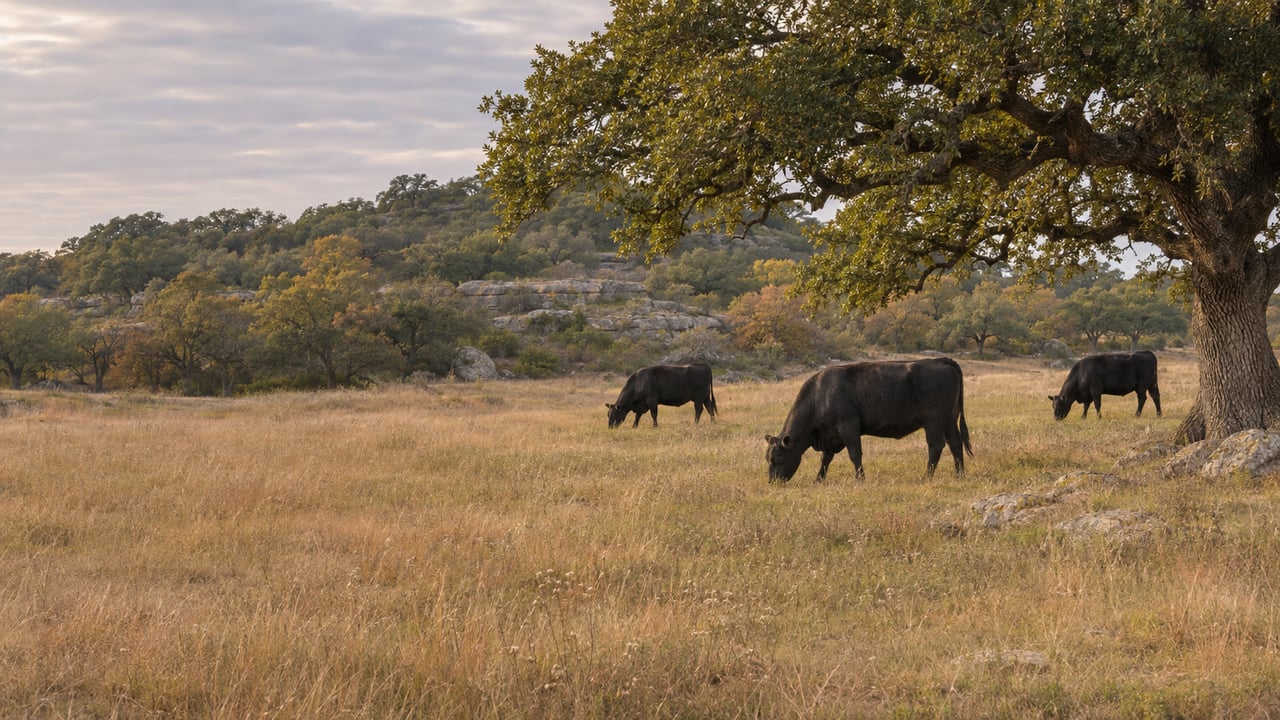
The deed changes on closing day, and the cattle on the place may not change at all. Under Texas law, that second fact now carries more weight than it used to.
Starting January 1, 2026, a Texas ranch that changes hands is not considered to have changed ownership for open-space valuation purposes if the new owner uses the land "in materially the same way" and that use is "overseen or conducted by the same individuals" as the year before. The change came from H.B. 1244, passed by the 89th Legislature. In Mason County, most taxable ranch land is valued on what it produces. Its market price plays no part. So whoever runs the operation the day after closing now does a lot to decide how smoothly that valuation carries over.
The gap a ranch buyer is inheriting
Start with the size of what's at stake. In the Texas Comptroller's 2025 preliminary property value study, Mason County had 571,521 acres under productivity valuation. Native pasture made up 491,005 of those acres and was reported at $90.38 an acre. Another 36,715 acres were valued under wildlife management. You can see the county's full productivity comparison on the Comptroller's site.
Compare that with what land sells for. In the Texas Real Estate Research Center's second-quarter 2026 report, the median price in the Austin-Waco-Hill Country region hit a record $8,040 an acre, up 8.63% from a year earlier. The Center says its figures show general market trends and are not the value of any particular ranch. In Mason County, a ranch acre is taxed on a value of roughly a hundred dollars, while comparable Hill Country land sells for thousands. That gap is what a buyer is protecting, and it's also what a rollback would collect.
What the statute now says about a sale
For land valued under the 1-d-1 open-space rules, the general rule hasn't changed. A new application is required when ownership changes, and if a valid application isn't filed on time, the land loses special valuation for that year. The usual deadline is before May 1.
The 2026 amendment adds an exception. Here is the text of Texas Tax Code §23.54(e-1), from Chapter 23 as published by the Texas Legislature:
"the ownership of the land that was appraised under this subchapter in the preceding tax year is not considered to have changed if: (1) the ownership of the land is transferred from the former owner to the surviving spouse of the former owner; or (2) after the ownership of the land is transferred from the former owner to the new owner: (A) the new owner uses the land in materially the same way as the former owner used the land during the preceding tax year; and (B) the use described by Paragraph (A) is overseen or conducted by the same individuals who oversaw or conducted that use during the preceding tax year."
A related section, §23.541(a-2), gives a new owner who meets those same conditions more time. The appraisal district must accept the application if it's filed by the later of two dates: the tax delinquency date for that year, or the first anniversary of the transfer. The 10% late-filing penalty doesn't apply to these filings. Comptroller Form 50-129, the 1-d-1 application, follows the same rule. A qualifying new owner only has to update information that changed. A buyer who doesn't qualify has to answer every use question, plus the wildlife section if it applies.
The key words are "same individuals." The statute ties the easier path to the people doing the work. A sale where the same grazing operation, run by the same people, continues on the place matches the facts the exception describes. A sale where the buyer brings in a different operator, or pulls the cattle and starts something new, is the ordinary case, with the ordinary paperwork and the ordinary May 1 deadline.
| After closing | How the statute treats ownership | Filing window | Late penalty |
|---|---|---|---|
| Same use, same individuals running it | Not considered changed | Later of tax delinquency date or first anniversary of transfer | Does not apply |
| Transfer to surviving spouse | Not considered changed | Under (e-1), ownership is not considered changed | Not addressed in this rule |
| New operator or a new use | Changed; new application required | Before May 1 | 10% if filed late and approved before records are certified |
A sale does not trigger rollback. A change of use does
Buyers often expect a bill at closing. Under Tax Code §23.55, the additional tax called rollback is triggered when the use of the land changes. It equals the difference between the taxes actually paid and the taxes that would have been due at market value, for each of the three years before the year of the change. The Comptroller's agricultural appraisal manual puts it this way: 1-d-1 land requires a rollback tax "only when agricultural operations cease or the use changes."
Three more parts of §23.55 matter at the closing table:
- A tax lien attaches to the land on the date the use changes. It runs in favor of every taxing unit that imposes the additional tax.
- The chief appraiser decides whether a change of use has happened and must tell the owner of the right to protest. If the owner doesn't protest, or loses the protest, the tax becomes delinquent if it isn't paid before the next February 1 that falls at least 20 days after the bill is delivered.
- Claiming part of the land as a residence homestead does not, on its own, count as a change of use.
Section 23.54(h) adds a notice duty for the owner. If the land stops qualifying, or the category of agricultural use changes, the owner must notify the appraisal office in writing before May 1. If the owner doesn't, the penalty is 10% of the tax difference for each year the valuation was wrongly allowed. The chief appraiser can also go back up to five years in those cases.
What the rollback would look like in Mason County
Because rollback looks back three years, it uses three years of tax rates. In Mason County, those rates have moved. According to Mason CAD's published rate table, the per-$100 rates for rural land in the Mason ISD part of the county were:
| Tax year | Mason County | Mason ISD | Hickory UWD | Combined |
|---|---|---|---|---|
| 2023 | 0.600700 | 1.1137 | 0.03030 | 1.744700 |
| 2024 | 0.642700 | 1.10800 | 0.029762 | 1.780462 |
| 2025 | 0.642700 | 0.7494 | 0.029136 | 1.421236 |
| 2026 | 0.671035 | 0.74260 | 0.028412 | 1.442047 |
Land inside Doss CISD uses that district's school rate, and land within the city adds the City of Mason rate. For a change of use in 2026, the lookback covers 2023 through 2025. That window includes the two years when the Mason ISD rate was above 1.10 per $100.
Here's a hypothetical, for scale only. Take 100 acres with an assumed market value of $8,000 an acre and an assumed productivity value of $90 an acre. The difference is $791,000 in taxable value. At the 2025 combined rate, that one year adds up to roughly $11,240. At the 2024 rate, the same difference comes to roughly $14,080. A real rollback uses the appraisal district's market and productivity values for each of the three years, so the actual figure on any ranch will be different. The direction holds, though. In Mason County, the years with the highest school rates are still inside the lookback.
Where the TREC contract puts the bill
The TREC Farm and Ranch Contract, Form 25-17, effective July 1, 2026, deals with this in paragraph 13B:
"If this sale or Buyer's use of the Property after closing results in the assessment of additional taxes, penalties or interest (Assessments) for periods prior to closing, the Assessments will be the obligation of Buyer. If Assessments are imposed because of Seller's use or change in use of the Property prior to closing, the Assessments will be the obligation of Seller. Obligations imposed by this paragraph will survive closing."
Read this together with the statute. The buyer's plans for the land decide whether a rollback happens, and the standard contract makes the buyer responsible for assessments the buyer's use causes, even when those assessments cover years before closing. In paragraph 13A, the contract also allows current-year tax prorations to account for changes in exemptions and to be adjusted once the actual tax statements arrive.
This post is general information, not legal, tax or financial advice. Before you rely on any of these rules for your own property or contract, confirm the details with a Texas real estate attorney, a tax professional, and Mason CAD.
Wildlife valuation follows the same thread
About 36,715 acres in Mason County are valued under wildlife management. Under the Comptroller's guidelines, wildlife use counts as an agricultural use. The land generally must already have qualified for open-space or timber valuation when the wildlife use began, and the owner must carry out at least three of seven practices: habitat control, erosion control, predator control, supplemental water, supplemental food, supplemental shelter, and census counts. The wildlife management plan goes on Texas Parks and Wildlife Form PWD-885 and is filed with the county's chief appraiser. It does not go to TPWD. On a ranch already under a wildlife plan, the people doing the census counts and running the feeders and water are part of the "same individuals" question under the 2026 rule.
Questions to put to the seller before you sign
- Which valuation does the land have today: open-space agricultural, wildlife management, or both on different parts?
- Who has run the operation over the past year, under what arrangement, and will they stay on after closing?
- Does the seller have copies of the most recent Form 50-129 and any wildlife plan filed with Mason CAD?
- Has the seller changed any part of the use before closing? Under paragraph 13B, that's the seller's assessment to carry.
- Which school district taxes the land, Mason ISD or Doss CISD?
A few direct answers
Does selling a Mason County ranch trigger rollback taxes by itself? Under Tax Code §23.55, rollback is triggered by a change in the land's use. A change in ownership usually requires a new application, and missing the deadline makes the land ineligible for special valuation for that year.
What's new in 2026? H.B. 1244 took effect January 1, 2026. When a new owner continues materially the same use with the same individuals running it, ownership is not considered changed, and late filings under that path carry no 10% penalty.
Does building a home on part of the ranch end the valuation on all of it? Under §23.55(d), when only part of a parcel changes use, the additional tax applies only to that part.
When we walk a Mason County ranch with a buyer, one of the first things we ask is who runs the cattle and whether they'll still be there in January. If you're weighing a ranch purchase or getting land ready to sell, the team at Reata Ranch Realty can help you get those answers from the seller and check the current valuation status before you sign the contract.