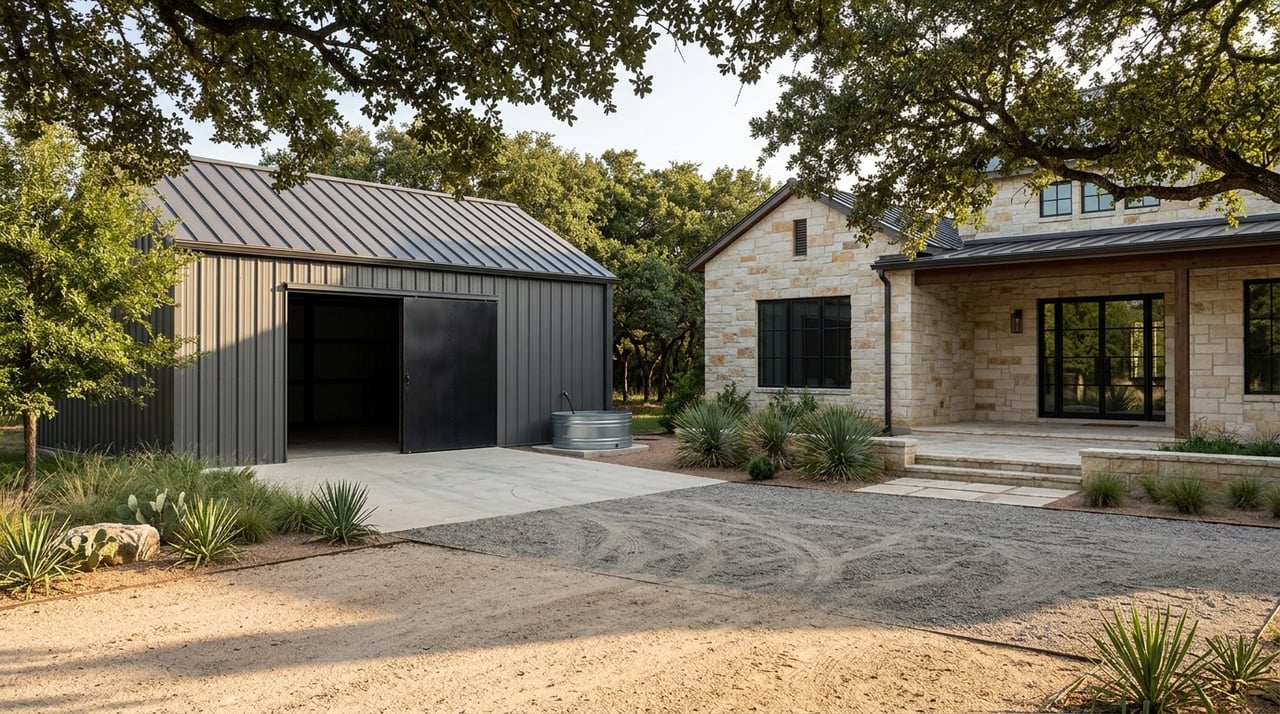
Trying to choose between a ranch and a ranchette in Gillespie County? The right answer usually has less to do with the listing label and more to do with how you want to use the land day to day. If you are weighing privacy, upkeep, building plans, water, taxes, and long-term flexibility, a few local details can make the decision much clearer. Let’s dive in.
Why the Label Is Only the Starting Point
In Gillespie County, the difference between a ranch and a ranchette is often more practical than formal. A ranch usually points to a larger tract meant for active land use, while a ranchette often means a smaller rural homesite with lighter production goals.
That matters because your experience of owning the property will depend on what the land can support. A tract that looks ideal online may function very differently once you factor in access, frontage, septic requirements, well use, and future plans.
How Gillespie County Shapes the Decision
County rules create some useful real-world breakpoints. For subdivisions served by a well and an on-site sewage facility, the minimum lot size is 6 acres per lot, and the parent tract density cannot exceed one lot per 8 acres.
If a tract fronts a privately maintained unpaved road, the resulting tracts must be at least 10 acres, and no more than eight single-family tracts may use that road. Those rules can affect whether a smaller property feels like a simple country homesite or whether a larger tract offers more flexibility over time.
Frontage and access matter
Access is not just a legal checkbox. It affects daily use, future building plans, and ongoing maintenance.
Gillespie County subdivision guidance sets minimum frontage at 200 feet on major thoroughfares, primary roads, secondary roads, and state or federal highways. On cul-de-sacs, the minimum frontage is 100 feet.
The county also places private-road maintenance on the owners or HOA until the road is formally accepted by the county. In plain terms, two properties with similar acreage can feel very different if one has county-road frontage and the other depends on a shared or private road.
When a Ranch Makes More Sense
A larger ranch often fits you best if your goals go beyond simply living in the country. You may want more room for livestock, crop production, wildlife management, recreation, or long-term stewardship.
Larger tracts can also give you more separation, more room for infrastructure, and more flexibility in how different parts of the property are used. If you are thinking about a property as a legacy asset, that extra scale can matter.
The tradeoff is management. Roads, fences, wells, septic systems, brush work, and general land maintenance become more important as acreage grows.
If controlled or prescribed burning is part of your land strategy, local rules matter there too. Gillespie County’s burn-ban guidance shows that prescribed burning is regulated and tied to weather, timing, and supervision requirements.
When a Ranchette May Be the Better Fit
A ranchette often works well if you want country living without taking on the scale of a working ranch. It may suit a full-time residence, a second home, or a weekend retreat where the goal is space and Hill Country scenery rather than broad production use.
For many buyers, that means less day-to-day management and a lower overall maintenance load. You still get rural character, but usually with fewer moving parts than a larger working property.
The tradeoff is that smaller tracts can offer less operational flexibility. You may have fewer options for future subdivision, fewer choices for placing improvements, and a stronger need to verify utilities and access before assuming the property is build-ready.
Water and Septic Often Decide the Budget
In rural Gillespie County, infrastructure questions can quickly shape your total cost. A property may look straightforward at first, but the real picture comes into focus when you understand how water and wastewater will be handled.
Wells are a key part of rural ownership
The county points buyers to the Hill Country Underground Water Conservation District for water planning. The district’s registration form states that all wells in Gillespie County must be registered with the district.
The county engineering department also notes that Gillespie County is in a Priority Groundwater Management Area. That makes water conservation and drought resilience an ongoing part of rural ownership, especially if you are comparing a larger tract with higher land-use demands to a smaller homesite.
Septic permits are not optional
Texas Commission on Environmental Quality guidance says on-site sewage facilities, including septic systems and holding tanks, require permits before construction, installation, repair, extension, or alteration. Gillespie County’s sanitation office provides local permit applications, rules, fees, and information for installers and maintenance providers.
That means you should not assume an existing setup can simply be expanded or changed without review. If you are planning a main house, guest space, or multiple improvements, septic capacity and permitting can become a major part of the decision.
More Structures Can Mean More Requirements
A property’s layout can matter just as much as its size. If you are thinking about more than one dwelling, guest structure, or business use, rural addressing rules may come into play earlier than expected.
Gillespie County requires private roads serving multiple family or business structures to be named, and each structure must receive a separate address. That may sound minor at first, but it can affect planning, permitting, and how a property functions over time.
Buildability Is About More Than Open Space
Open land does not always mean unrestricted building potential. Before you assume a tract is ready for your plans, it helps to look at local constraints that may shape where and how improvements can happen.
The county engineering department reviews floodplain development permits and right-of-way permits. The county’s airport zoning guidance also warns that height and airspace restrictions can apply near the county airport.
For buyers deciding between a ranch and a ranchette, this is important. A smaller tract has less room to work around constraints, while a larger tract may offer more placement options but also more land to evaluate.
Tax Treatment Can Change the Math
In Texas, there is no state property tax. Local taxing units set the rates, so your property’s county, school, and other local tax structure matters more than whether the listing is called a ranch or a ranchette.
If land qualifies, agricultural or open-space appraisal taxes the land based on productivity value rather than market value. A change from agricultural to non-agricultural use can trigger rollback tax.
Wildlife management use may also qualify for special appraisal. For many buyers, this is one of the biggest reasons to think carefully about intended use before closing.
Smaller acreage is not automatically out
Gillespie CAD states that landowners must apply and prove qualification for agricultural appraisal. The district also makes clear that agricultural appraisal applies to land only, while improvements such as homes, barns, and silos are appraised separately at market value.
Current Gillespie CAD materials describe a five-of-seven-year agricultural history test along with use-history and intensity standards. They also list categories such as livestock, crop production, wildlife management, and beekeeping.
That means a ranchette is not automatically excluded from the tax-benefit conversation. The real question is whether the current and intended use fits an approved category and meets district standards.
A Simple Way to Decide
If you are stuck between the two, start with your actual use plan instead of your idealized vision. The best property is the one that matches how you want to live on it, maintain it, and hold it over time.
A ranch may be the better fit if you want:
- Active land use at a larger scale
- More room for roads, barns, wells, and other infrastructure
- Greater privacy and separation
- Long-term stewardship or legacy ownership goals
A ranchette may be the better fit if you want:
- A rural homesite with a simpler footprint
- Country living with less ongoing management
- A second home or weekend retreat
- A smaller tract that still supports your core lifestyle goals
Questions to Ask Before You Buy
In Gillespie County, the smartest due diligence questions are often the same whether you are buying 10 acres or hundreds. These answers will usually tell you more than the marketing description ever could.
Ask:
- Is the access legal, durable, and practical in all seasons?
- Does the tract have adequate frontage for your plans?
- Is the well registered, and will water supply support intended use?
- Is there a septic permit in place, and can the system support future improvements?
- Are there private-road maintenance obligations?
- Are any parts of the property in a floodplain?
- Could airport zoning or right-of-way issues affect build plans?
- Does the current or intended land use align with agricultural or wildlife appraisal standards?
The Bottom Line for Gillespie County Buyers
In Gillespie County, the ranch-versus-ranchette choice usually comes down to fit. Acreage matters, but water, septic, access, frontage, tax treatment, and future use often matter more.
When you line those pieces up with your real goals, the right path tends to become clear. Whether you want a manageable rural homesite or a larger legacy property, a practical local review can help you buy with confidence.
If you are weighing acreage in Gillespie County and want grounded guidance on how a property will actually work in real life, the team at Reata Ranch Realty is here to help you evaluate the details that matter.
FAQs
What is the difference between a ranch and a ranchette in Gillespie County?
- In practical terms, a ranch is usually a larger tract intended for active land use, while a ranchette is often a smaller rural homesite with lighter production goals.
What minimum lot sizes apply to rural land in Gillespie County?
- For subdivisions served by well and OSSF, Gillespie County states a minimum of 6 acres per lot, with parent tract density not exceeding one lot per 8 acres. Tracts on privately maintained unpaved roads must be at least 10 acres.
What should buyers know about septic permits in Gillespie County?
- On-site sewage facilities require permits before construction, installation, repair, extension, or alteration, and Gillespie County’s sanitation office handles local applications, rules, and fee information.
What should buyers know about wells in Gillespie County?
- The Hill Country Underground Water Conservation District states that all wells in Gillespie County must be registered, and water planning is an important part of rural ownership in this area.
Can a Gillespie County ranchette qualify for agricultural appraisal?
- Possibly. Gillespie CAD says qualification depends on approved use categories, use history, and intensity standards, so smaller acreage is not automatically excluded.
Why does road access matter for Gillespie County land purchases?
- Access affects usability, frontage compliance, maintenance responsibility, and future flexibility, especially if a property relies on a shared or privately maintained road rather than county-road frontage.